Reliable smoke detection does not have to be expensive. This roundup compares 10 smoke detectors under $100, from compact battery-powered alarms to hardwired models with battery backup and multi-pack coverage.
Use the guide below to match detector type, power source, sensing features, installation needs, and household coverage with your home’s layout and safety priorities.
Best 10 Smoke Detectors Under 100 Picks for 2026
Best Precision Detection Value
First Alert Battery Smoke Alarm

- Two-pack with battery-powered installation
- Precision Detection helps reduce cooking nuisance alarms
- Front-access battery compartment and end-of-life warning
Best For: Homes needing two easy-to-maintain smoke alarms
Best Smoke and CO Combo
Kidde 30CUDR Smoke & CO Detector

- Combines smoke and carbon monoxide detection
- Includes two AA batteries and mounting hardware
- 85 dB alarm, LED warning, and 10-year limited warranty
Best For: Homes and apartments wanting no-wiring combination detection
Best Hardwired Multi-Pack

- Three hardwired smoke alarms
- Battery backup included
- Designed for wired replacement or expansion projects
Best For: Homes with compatible hardwired alarm connections
Best Compact Battery Model
Kidde 10SDR Compact Smoke Detector

- Compact four-inch design for small spaces
- Includes two AA batteries for no-wiring setup
- 85 dB alarm with LED status light and 10-year warranty
Best For: Small rooms needing a compact smoke-only alarm
Best Hardwired Pick
First Alert Smoke Alarm with Battery Backup

- Hardwired power with 10-year battery backup
- Precision Detection helps reduce cooking nuisance alarms
- Compatible interconnect can trigger multiple alarms
Best For: Hardwired homes needing outage backup
Best Photoelectric Value
SITERWELL 9V Battery Smoke Alarm 2-Pack

- Photoelectric sensing for slow-smoldering fires
- Battery-powered installation needs no rewiring
- Includes two alarms and mounting supplies
Best For: Renters and rooms without alarm wiring
Best for Nuisance-Alarm Control
SITERLINK Dual-Light Smoke Detectors

- Dual-light detection helps reduce false alarms
- Up to 10-hour one-button silence function
- Includes adhesive and screw-mount options
Best For: Flexible battery-powered placement
Reliable Hardwired Pick
BRK First Alert 9120BFF/SMI100-AC

- 120V AC power with 9V battery backup
- 85dB ionization alarm for fast-flaming fires
- Interconnects with compatible BRK and First Alert alarms
Best For: Straightforward hardwired home alarm coverage
Low-Maintenance Choice
Kidde 20SA10 Hardwired Smoke Detector
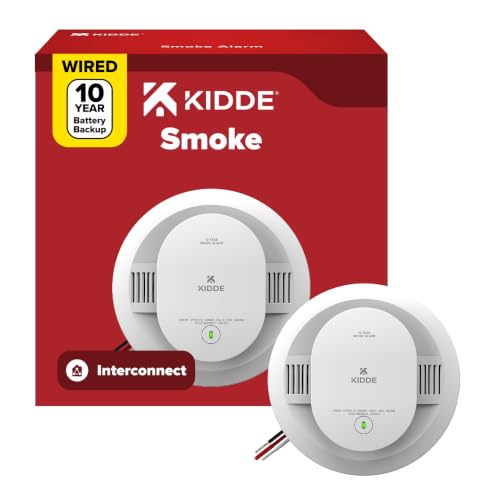
- Built-in 10-year battery backup
- Photoelectric sensing helps reduce false alarms
- 85dB alarm with red LED and Kidde interconnect capability
Best For: Long-term, low-maintenance hardwired protection
Whole-Home Value Pack
First Alert BRK SMI100-AC 6-Pack

- Six hardwired alarms with battery backup
- Includes six 9V batteries and mounting hardware
- Interconnects with up to 18 compatible units
Best For: Outfitting multiple rooms or levels at once
Best Precision Detection Value – First Alert Battery Smoke Alarm
For shoppers comparing smoke detectors under 100, this two-pack from First Alert offers battery-powered installation and Precision Detection sensing designed to reduce cooking nuisance alarms. Its front-access battery compartment and test/silence button make routine upkeep straightforward.
Best For: Homes needing two easy-to-install smoke alarms with convenient battery access.
Pros:
- Precision Detection technology is designed to reduce cooking nuisance alarms.
- Battery operation supports easy installation without wiring.
- Front-access battery compartment simplifies replacements.
- End-of-life warning helps indicate when replacement is needed.
Cons:
- Detects smoke only, rather than smoke and carbon monoxide.
- Uses a 9V alkaline battery, which must be maintained separately.
This is a practical two-alarm option when simple installation and maintenance matter. The included test/silence control and end-of-life warning add useful everyday convenience.
Best Smoke and CO Combo – Kidde 30CUDR Smoke & CO Detector
Among smoke detectors under 100, the Kidde 30CUDR stands out by combining smoke and carbon monoxide detection in one battery-powered unit. It includes two AA batteries, an 85-decibel alarm, visual LED alerts, and a 10-year limited warranty.
Best For: Homes and apartments seeking combined smoke and carbon monoxide protection without hardwiring.
Pros:
- Detects both smoke and carbon monoxide.
- AA battery operation enables no-wiring installation.
- Advanced sensing is designed to reduce false alarms from cooking or steam.
- Includes an 85-decibel alarm, red LED warning, and 10-year limited warranty.
Cons:
- This listing is for one detector.
- It is larger than the compact Kidde 10SDR model.
Choose this model if combining two critical detection functions in one device is more important than buying a multi-pack. Its included batteries and mounting hardware make setup approachable for homeowners and apartments.
Best Hardwired Multi-Pack – First Alert SM6W01 3-Pack
For smoke detectors under 100 in homes already set up for wired alarms, the First Alert SM6W01 provides three hardwired smoke alarms with battery backup. Its corded-electric design is suited to installations where a wired power source is preferred.
Best For: Replacing or adding multiple hardwired smoke alarms where battery backup is desired.
Pros:
- Three-pack supports coverage across multiple areas.
- Hardwired power avoids relying solely on replaceable batteries.
- Battery backup adds an additional power source during outages.
Cons:
- Hardwired installation is less convenient than a fully battery-powered alarm.
- Uses ionization sensing and provides smoke detection rather than carbon monoxide detection.
This pack makes the most sense for a compatible hardwired setup or a replacement project involving several alarms. It is less suitable for renters or locations without existing wiring.
Best Compact Battery Model – Kidde 10SDR Compact Smoke Detector
If you are comparing smoke detectors under 100 for smaller spaces, the Kidde 10SDR pairs a compact four-inch design with battery-powered installation. It includes two AA batteries, an 85-decibel alarm, LED status lights, and sensing intended to reduce cooking or steam-related false alarms.
Best For: Small rooms and homes needing a compact, no-wiring smoke alarm.
Pros:
- Compact four-inch housing suits homes and small spaces.
- Two included AA batteries support easy installation.
- Photoelectric sensing is designed to reduce nuisance alarms from cooking or steam.
- Includes an 85-decibel alarm, red LED warning, and 10-year limited warranty.
Cons:
- Detects smoke only and does not include carbon monoxide detection.
- This listing includes one alarm.
The 10SDR is a sensible choice when available space and simple setup are priorities. Its compact form keeps the installation unobtrusive while retaining clear audible and visual alerts.
Best Hardwired Pick – First Alert Smoke Alarm with Battery Backup
For shoppers comparing smoke detectors under 100, this First Alert model is a practical choice when you want hardwired power with backup protection. Its Precision Detection sensing is designed to reduce cooking nuisance alarms, while the 10-year battery backup helps maintain protection during power outages.
Best For: Homes needing a hardwired smoke alarm with extended backup power and compatible alarm interconnect capability.
Pros:
- 10-year battery backup supports continued operation during outages.
- Precision Detection technology is designed to reduce cooking-related nuisance alarms.
- Early-warning interconnect can make compatible alarms sound together.
- Alarm indicator identifies which unit initiated the alarm.
Cons:
- Requires a corded-electric, hardwired installation.
- Sold as a single alarm.
- Uses an ionization sensor, according to the supplied specifications.
This is a strong fit for replacing or upgrading a compatible hardwired alarm, especially where outage protection and interconnected alerts matter. Check wiring compatibility before installation.
Best Photoelectric Value – SITERWELL 9V Battery Smoke Alarm 2-Pack
Among smoke detectors under 100, this two-pack offers a straightforward battery-powered setup for rooms without existing alarm wiring. Its photoelectric sensor is intended to detect slow-smoldering fires, and the included 9V batteries and mounting hardware simplify installation.
Best For: Renters, additions, or other spaces that need simple wall- or ceiling-mounted smoke alarms without rewiring.
Pros:
- Photoelectric technology targets slow-smoldering fires that produce light smoke.
- Includes two alarms, 9V batteries, mounting hardware, and a user manual.
- Test and silence button supports routine checks and temporary muting.
- Alarm output is rated above 85 dB, with a low-battery warning.
Cons:
- Requires periodic replacement of the 9V battery.
- Battery-powered design does not provide hardwired interconnection.
- Weekly testing is required according to the supplied notes.
This SITERWELL pack is a convenient option when easy installation and photoelectric sensing are priorities. Plan for ongoing battery checks and replacement as part of routine maintenance.
Best for Nuisance-Alarm Control – SITERLINK Dual-Light Smoke Detectors
For shoppers seeking smoke detectors under 100 with flexible placement, this SITERLINK two-pack uses replaceable 9V batteries and includes both adhesive pads and conventional mounting hardware. Its dual-light detection and independent compensation are designed to help maintain sensitivity while reducing false alarms from environmental changes.
Best For: Battery-powered home installations where flexible mounting and temporary alarm muting are useful.
Pros:
- Dual-light detection is designed to distinguish non-fire smoke and reduce false alarms.
- Independent learning compensates for temperature, humidity, dust, and other changes.
- One-button silence function can mute the alarm for up to 10 hours.
- Includes 3M adhesive pads, screws, anchors, and mounting brackets.
Cons:
- Requires replaceable batteries and does not use hardwired power.
- Supplied notes caution against installation in damp, drafty, or covered areas.
- Adhesive installation may not suit every mounting surface.
This pack stands out for installation flexibility and nuisance-alarm management. Use the included mounting method appropriate for the surface, and keep replacement batteries available.
Reliable Hardwired Pick – BRK First Alert 9120BFF/SMI100-AC
If you want smoke detectors under 100 that provide continuous monitoring without relying solely on batteries, this BRK First Alert model is a practical choice. It uses 120V AC power with a 9V battery backup and an ionization sensor designed to detect smoke from fast-flaming fires.
Best For: Homeowners seeking a straightforward hardwired alarm with battery backup and interconnect capability.
Pros:
- Battery backup helps maintain monitoring during power failures.
- Loud 85-decibel alarm and ionization sensing provide audible, fast-flame-fire alerts.
- Compatible BRK and First Alert alarms can be interconnected so multiple units sound together.
- Single test/silence button, side-load battery compartment, and universal mounting bracket simplify use.
Cons:
- Uses a replaceable 9V battery rather than a built-in long-life battery.
- Ionization sensing is specifically intended for fast-flaming fires, so a complete home setup may require other detector types.
With its familiar controls, 10-year limited warranty, and hardwired design, this is a sensible single-unit option for replacing or expanding a compatible alarm system.
Low-Maintenance Choice – Kidde 20SA10 Hardwired Smoke Detector
Among smoke detectors under 100, the Kidde 20SA10 stands out for reducing routine battery maintenance. It runs on 120V AC and includes a built-in 10-year battery backup, while its photoelectric sensing technology is designed to provide quick detection and help reduce false alarms from cooking or steam.
Best For: Homeowners, apartment managers, and contractors who want hardwired detection with minimal battery replacement.
Pros:
- Built-in 10-year battery backup helps avoid routine battery replacements and low-battery chirps.
- Enhanced sensing is designed to detect smoke over 25% faster and help reduce false alarms.
- 85-decibel alarm and red LED provide audible and visual warnings.
- Can interconnect with other Kidde alarms so connected units sound together.
Cons:
- The built-in battery is not intended for routine replacement.
- It requires a compatible hardwired electrical connection for installation.
This model is a strong fit when long-term convenience matters. Its 10-year limited warranty, photoelectric sensor, and integrated backup battery make it especially appealing for installations where minimizing maintenance is a priority.
Whole-Home Value Pack – First Alert BRK SMI100-AC 6-Pack
First Alert BRK SMI100-AC Hardwired Smoke Detector with Battery Backup, 6-Pack
Check Price On AmazonFor covering several rooms or levels at once, this six-pack is a practical option among smoke detectors under 100. Each unit uses 120V AC power with a 9V battery backup, and the alarms can be interconnected to provide a coordinated warning throughout the home.
Best For: Homeowners, landlords, and renovation projects needing multiple hardwired alarms in one purchase.
Pros:
- Six alarms help outfit multiple bedrooms, floors, or other areas.
- Battery backup keeps alarms operating during power outages.
- Up to 18 compatible units can be interconnected, including smoke, CO, heat, and relay alarms within the stated configuration.
- Includes mounting hardware and 9V batteries for all six alarms.
Cons:
- Each alarm uses a replaceable 9V battery.
- Its ionization sensor is geared toward fast-flaming fires rather than serving as a universal sensor for every fire type.
- A six-pack may be more than needed for a small space or single-room replacement.
If you need consistent alarms across a larger property, this value pack simplifies installation by supplying six matching units, batteries, and mounting hardware while retaining the familiar test/silence controls.
How We Picked the Best Smoke Detectors Under 100
We focused on practical value, installation flexibility, alarm coverage, power options, and long-term convenience. The selection includes standalone smoke alarms, combination smoke and carbon monoxide detectors, hardwired units with battery backup, and multi-packs for covering several rooms.
We also considered features that affect everyday ownership, including replaceable or sealed batteries, compact designs, interconnection potential, backup power, and recognized safety certifications. Always confirm that a detector meets current local code requirements and is suitable for its intended location.
Quick Comparison
| Type | Best For | Main Advantage | Potential Trade-Off |
|---|---|---|---|
| Battery-powered smoke alarm | Renters and simple installations | Fast, wiring-free setup | Requires battery maintenance |
| Smoke and CO detector | Homes needing dual protection | Detects two common hazards in one unit | May cost more than a smoke-only alarm |
| Hardwired with battery backup | Existing wired systems and remodels | Continuous household power with backup | Installation may require electrical work |
| Multi-pack | Whole-home coverage | Consistent alarms across multiple rooms | Higher upfront cost |
Key Buying Factors for Smoke Detectors Under $100
Power and Installation
Battery-powered alarms are usually the easiest choice for renters, finished spaces, and homes without existing alarm wiring. Hardwired models make more sense when replacing compatible units or installing during construction. Check connector compatibility before assuming a replacement will fit.
Smoke-Only Versus Combination Detection
A smoke-only alarm is appropriate when carbon monoxide protection is already installed separately. Combination models can simplify coverage, particularly near sleeping areas, utility rooms, or attached garages, but they do not replace the need to follow placement guidance.
Battery Type and Maintenance
Replaceable batteries can reduce replacement costs and make maintenance straightforward, while sealed 10-year batteries minimize routine battery changes. Regardless of battery style, test alarms regularly and replace the complete detector according to the manufacturer’s schedule.
Coverage and Quantity
One alarm rarely provides adequate protection for an entire home. Consider detectors inside bedrooms, outside sleeping areas, and on every level, while following local regulations. Multi-packs can be a cost-effective way to create consistent coverage.
Who Should Buy Which Smoke Detectors Under 100?
- Renters or shoppers wanting simple installation: Choose a battery-operated First Alert, Kidde, or SITERWELL model.
- Households wanting two types of protection: Choose the Kidde smoke and carbon monoxide detector.
- Homes with existing alarm wiring: Consider a hardwired model with battery backup, such as the BRK, First Alert, or Kidde options.
- Whole-home upgrades: Choose a three- or six-pack when several rooms need new alarms at once.
- Buyers prioritizing less battery maintenance: Look for a hardwired alarm with a sealed 10-year backup battery.
The best smoke detector is the one that matches your home’s wiring, provides adequate coverage, and can be tested and maintained consistently. Before purchasing, verify dimensions, mounting requirements, certifications, and compatibility with any existing interconnected alarm system.