Hardwired smoke detectors can provide dependable, whole-home coverage while reducing the need to replace disposable batteries frequently. Many models also include battery backup and interconnected alarms for faster alerts throughout the house.
We compared these 10 options by backup power, interconnection features, sensing technology, installation flexibility, and value for multi-room protection.
Best 10 Hardwired Smoke Detectors Picks for 2026
Contractor Pack Pick
First Alert BRK SMI100-AC 6-Pack
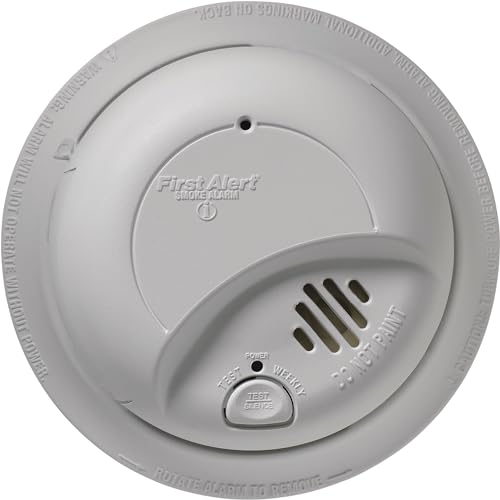
- Six hardwired alarms with battery backup
- Ionization sensing and 85 dB alarm
- Interconnects with compatible BRK and First Alert units
Best For: Whole-home coverage and multi-alarm replacements
False-Alarm Reduction Pick

- Eight 120V hardwired alarms with 9V backup
- Photoelectric sensing targets fewer nuisance alarms
- Interconnects up to 12 alarms
Best For: Large homes prioritizing interconnected photoelectric coverage
Easy-Install Precision Pick

- Precision Detection helps reduce cooking nuisance alarms
- Battery backup protects during power outages
- Quick Connect Plug can avoid rewiring
Best For: Compatible hardwired alarm replacements
Modern Sensing Pick

- Photoelectric sensing helps reduce nuisance alarms
- AA battery backup with 85 dB alarm
- Interconnects with other Kidde alarms
Best For: Kidde-compatible home and apartment installations
Precision Cooking Protection

- Precision Detection helps reduce cooking nuisance alarms
- 10-year battery backup
- Interconnect and alarm-origin indicator
Best For: Interconnected household smoke protection with extended backup
Practical Multi-Room Upgrade
First Alert BRK SMI100-AC 6-Pack

- Six hardwired alarms with battery backup
- Interconnects with up to 18 compatible units
- Open mounting and side-load battery compartment
Best For: Whole-home or job-site alarm replacement
Voice-Alert Combination Safety
SITERWELL GS886F Smoke and CO Detector

- Smoke and carbon monoxide detection
- Wired or wireless connection for up to 12 units
- Voice alerts and self-check function
Best For: Flexible interconnected smoke-and-CO protection
Reliable Whole-Home Coverage

- 120V hardwired power with 9V backup
- Interconnects up to 12 alarms
- Photoelectric sensor with >85dB alarm
Best For: Whole-home smoke-only coverage with discreet status lighting
Dual-Threat Protection
First Alert BRK SC9120B 6-Pack

- Detects smoke and carbon monoxide
- Battery backup for outages
- Includes adapter plugs and mounting brackets
Best For: Homes wanting combined hardwired smoke and CO monitoring
Standards-Focused Sensing
SITERWELL Photoelectric 6-Pack

- 120V hardwired with 9V backup
- Interconnects up to 12 detectors
- Stated UL 217 10th Edition listing
Best For: Smoke-only systems with maintenance reminders and updated sensing features
Contractor Pack Pick – First Alert BRK SMI100-AC 6-Pack
First Alert BRK SMI100-AC Hardwired Smoke Alarm with Battery Backup, Contractor 6-Pack
Check Price On AmazonFor outfitting several rooms at once, this six-pack of hardwired smoke detectors combines 120V wiring with battery backup for continued monitoring during a power failure. Its ionization sensor is designed to detect smoke from fast-flaming fires, while compatible BRK and First Alert alarms can be interconnected.
Best For: Contractors, larger homes, and buyers replacing multiple alarms at once.
Pros:
- Six alarms provide broad whole-home coverage.
- Battery backup supports operation during power outages.
- Interconnects with compatible BRK and First Alert detectors.
- Side-load battery drawer and universal mounting brackets simplify maintenance and installation.
Cons:
- Ionization sensing may be less suited to buyers specifically seeking photoelectric detection.
- A loose neutral connection in the home junction box could cause malfunction.
This is a practical bulk option when you need matching alarms across multiple levels and bedrooms. Confirm the wiring connections carefully and install according to the manufacturer’s guidance.
False-Alarm Reduction Pick – Siterlink GS562A 8-Pack
This eight-pack of hardwired smoke detectors is built for interconnected home coverage, with 120V operation and 9V battery backup. Its photoelectric sensing conforms to the UL 217 9th edition standard and is designed to reduce alarms caused by cooking fumes and water vapor.
Best For: Families wanting broad interconnected coverage and a convenient silence function.
Pros:
- Eight alarms help cover multiple rooms and levels.
- Interconnect capability supports up to 12 alarms, so all connected units sound together.
- One-touch silence mode can mute the alarm for up to 10 hours.
- Hidden LED indicators are designed to remain visible without disturbing sleep.
Cons:
- The supplied notes do not specify compatibility with other brands’ interconnected alarms.
- Includes a 9V backup battery rather than the AA backup format used by some alternatives.
With its large pack size, photoelectric sensor, and networked alarm behavior, the GS562A is a strong choice for installing a coordinated system throughout a home. Verify interconnection requirements before mixing it with existing alarms.
Easy-Install Precision Pick – First Alert SMI100-AC
This First Alert hardwired smoke detector uses Precision Detection technology to help reduce cooking nuisance alarms while providing early warning during a fire emergency. Battery backup maintains protection during outages, and the included Quick Connect Plug can simplify replacement without rewiring.
Best For: Homeowners replacing compatible hardwired alarms who want a simpler connection process.
Pros:
- Precision Detection is designed to reduce cooking-related nuisance alarms.
- Battery backup supports continuous protection during power outages.
- Early-warning interconnect allows compatible alarms to sound together.
- Quick Connect Plug can make installation easier without rewiring.
Cons:
- The supplied listing information is inconsistent about pack quantity, so confirm the package contents before ordering.
- Interconnect operation is limited to compatible alarms.
This model makes sense for a like-for-like replacement where the existing wiring and compatible interconnect system are already in place. Check the manufacture date and package quantity when evaluating the listing.
Modern Sensing Pick – Kidde 20SAR 3-Pack
The Kidde 20SAR is a three-pack of hardwired smoke detectors with 120V power and two AA batteries for backup. It uses advanced photoelectric sensing to help reduce false alarms from cooking or steam, while wired interconnect capability makes it possible for connected alarms to sound together.
Best For: Homeowners, property managers, and contractors seeking photoelectric alarms with AA backup batteries.
Pros:
- Photoelectric sensing is designed to reduce false alarms while maintaining quick detection.
- Two AA backup batteries help maintain operation during power outages.
- Wired interconnect capability alerts occupants through connected Kidde alarms.
- Includes a loud 85 dB alarm, red LED warning, and 10-year limited warranty.
Cons:
- The supplied notes specify interconnection with other Kidde alarms, not universal cross-brand compatibility.
- A three-pack may provide less coverage than larger multi-packs.
This is a well-rounded choice for smaller homes, apartments, or targeted replacements where Kidde compatibility matters. Its photoelectric sensor, AA backup, and status indicators provide a practical balance of convenience and coverage.
Precision Cooking Protection – First Alert SMI105-AC 6-Pack
For shoppers comparing hardwired smoke detectors, the First Alert SMI105-AC combines Precision Detection sensing with a 10-year battery backup. Its interconnected design can make compatible alarms sound together, while the alarm indicator identifies which unit initiated the alert.
Best For: Homes wanting interconnected First Alert protection with reduced cooking nuisance alarms and long-term battery backup.
Pros:
- Precision Detection technology is designed to reduce cooking nuisance alarms.
- 10-year battery backup helps maintain protection during power outages.
- Early-warning interconnect makes compatible alarms sound when one detects danger.
- Visual alarm indicator and end-of-life warning support easier monitoring.
Cons:
- The supplied details identify the sensor as ionization, rather than a combination smoke-and-CO design.
- Compatibility should be confirmed before connecting with existing alarms.
This is a strong choice when synchronized alerts and a long-lasting backup matter most, particularly in homes where cooking-related nuisance alarms are a concern.
Practical Multi-Room Upgrade – First Alert BRK SMI100-AC 6-Pack
First Alert BRK SMI100-AC Hardwired Smoke Detector with Battery Backup, 6-Pack
Check Price On AmazonThis six-pack is a straightforward option for shoppers replacing several hardwired smoke detectors at once. Each First Alert BRK 9120B alarm uses 120-volt AC power with an included 9-volt battery backup, and the open mounting design is intended to simplify installation and battery replacement.
Best For: Multi-room installations and job sites that need six interoperable hardwired alarms with basic backup power.
Pros:
- Six alarms are included for coordinated multi-location replacement.
- 9-volt battery backup keeps each alarm functioning during a power outage.
- Alarms can interconnect with up to 18 compatible units.
- Includes tamper-resistant locking pins, test/silence control, mounting hardware, and batteries.
Cons:
- Uses ionization sensing and does not include carbon monoxide detection.
- The backup batteries are 9-volt units rather than a 10-year integrated battery.
- Existing alarm compatibility should be checked before interconnection.
Choose this pack when quantity, familiar controls, and easy battery access are more important than combination sensing or a longer integrated battery lifespan.
Voice-Alert Combination Safety – SITERWELL GS886F Smoke and CO Detector
Among hardwired smoke detectors, the SITERWELL GS886F stands out by combining smoke and carbon monoxide detection in one unit. It supports hardwired or wireless interconnection with up to 12 detectors, uses two AA batteries for backup, and provides voice alerts that distinguish between smoke and carbon monoxide hazards.
Best For: Homes seeking combined smoke-and-CO coverage, voice alerts, and flexible wired or wireless interconnection.
Pros:
- Combines smoke and carbon monoxide detection in a single detector.
- Can connect by hardwire or wirelessly with up to 12 units.
- Voice alerts identify whether smoke or carbon monoxide is detected.
- Self-check functionality and a stated 10-year sensor life support ongoing monitoring.
Cons:
- Only one detector is listed, so outfitting multiple rooms may require additional units.
- Backup uses two AA batteries, which require periodic replacement.
- Its combination features may be unnecessary for shoppers seeking a basic smoke-only alarm.
This model offers broader hazard coverage than smoke-only options, making it appealing when clear voice notifications and flexible interconnection are priorities.
Reliable Whole-Home Coverage – Siterlink GS562A 6-Pack
For shoppers comparing hardwired smoke detectors, the Siterlink GS562A 6-pack offers 120V AC operation with replaceable 9V battery backup. Its photoelectric sensor, loud alarm, and wired interconnection support coverage across multiple rooms.
Best For: Homeowners who want interconnected photoelectric alarms with a discreet indicator light.
Pros:
- Hardwired power with 9V battery backup for outages
- Interconnects up to 12 alarms so units can sound together
- Photoelectric sensing and an alarm louder than 85dB
- Test/silence button and softly visible built-in LED
Cons:
- Provides smoke detection only, not carbon monoxide detection
- Installation requires compatible 120V wiring
This is a practical choice for larger homes needing coordinated smoke alerts in several rooms, especially where a less intrusive indicator light is preferred.
Dual-Threat Protection – First Alert BRK SC9120B 6-Pack
Among hardwired smoke detectors, the First Alert BRK SC9120B stands out by combining smoke and carbon monoxide monitoring in one alarm. Battery backup, adapter plugs, and universal mounting brackets are designed to simplify replacement and installation.
Best For: Households seeking hardwired two-in-one smoke and carbon monoxide protection.
Pros:
- Combines smoke and carbon monoxide detection
- Battery backup maintains monitoring during power outages
- Adapter plugs can eliminate the need to rewire
- Side-load battery compartment and single test button
Cons:
- Uses a standard detection design rather than a photoelectric-only smoke sensor
- More focused on dual-threat coverage than specialized smoke-only features
The SC9120B is the most versatile option here for replacing existing compatible alarms when carbon monoxide protection is as important as smoke detection.
Standards-Focused Sensing – SITERWELL Photoelectric 6-Pack
For buyers evaluating hardwired smoke detectors with updated safety features, this SITERWELL model pairs 120V AC wiring with a replaceable 9V backup battery. It adds photoelectric sensing, interconnected alerts, fault reminders, and stated UL 217 10th Edition compliance.
Best For: Homeowners prioritizing interconnected photoelectric detection with maintenance and fault notifications.
Pros:
- Photoelectric sensor is designed to detect slow-smoldering fires
- Interconnects up to 12 units with simultaneous alarms
- Test/silence button includes a 10-hour low-battery mute mode
- Listed to UL 217 10th Edition according to the supplied product details
Cons:
- Does not provide carbon monoxide detection
- Requires hardwired installation and a compatible electrical setup
Its combination of interconnected alerts, maintenance reminders, and stated standards listing makes this a strong fit for shoppers who want more operational feedback from a smoke-only system.
How We Picked the Best Hardwired Smoke Detectors
We focused on detectors designed for permanent household installation, prioritizing hardwired power with battery backup, compatibility with interconnected alarm systems, and clear test or silence controls. We also considered whether each option is sold as a single unit or multipack, since larger homes often need several alarms installed together.
Product descriptions were reviewed for sensing type, carbon monoxide detection, backup-battery format, package size, and installation considerations. Always confirm that a selected alarm is compatible with your existing wiring, connector, and local code requirements before buying.
Quick Comparison
| What to Compare | Why It Matters |
|---|---|
| Backup battery | Keeps the alarm operating during power interruptions. |
| Interconnect capability | Allows multiple compatible alarms to sound together. |
| Detection type | Photoelectric sensing can be useful for detecting smoldering fires; combination units also monitor carbon monoxide. |
| Pack size | Multi-packs can simplify installation across bedrooms, hallways, and common areas. |
| Battery design | Standard replaceable batteries are easy to service, while long-life options reduce maintenance. |
Key Buying Factors for Hardwired Smoke Detectors
Power and Battery Backup
A hardwired alarm still needs backup power for outages. Check whether it uses a 9V, AA, or sealed long-life battery, and verify replacement or end-of-life instructions before installation.
Interconnection and Compatibility
Interconnected alarms are valuable in larger homes because a detected hazard in one area can trigger alerts elsewhere. Do not assume alarms from different brands or product families will interconnect; confirm compatibility and wiring requirements first.
Smoke Versus Combination Detection
Smoke-only detectors are suitable when carbon monoxide protection is already installed separately. Combination smoke and CO alarms can reduce the number of devices needed, but they should still be placed according to both smoke and carbon monoxide safety guidance.
Placement and Maintenance
Install alarms on every level, outside sleeping areas, and in or near bedrooms as recommended by local authorities. Test each unit regularly, keep vents clear, and replace alarms when they reach the manufacturer’s stated service life.
Who Should Buy Which Hardwired Smoke Detectors?
For broad household coverage: Choose a six- or eight-pack when replacing several alarms at once or outfitting a larger property.
For a straightforward replacement: A single First Alert or Kidde hardwired alarm may be the simplest choice when matching an existing system and connector.
For long-term convenience: Consider models with sealed 10-year batteries if you want to reduce routine battery changes, while checking the full replacement schedule for the alarm.
For smoke and CO protection: A combination First Alert or SITERWELL unit can be practical where both hazards need monitoring, provided the placement and interconnection setup are appropriate.
Before purchasing, count the required locations, identify your current wiring and alarm brand, and confirm the replacement model meets local regulations. Professional installation may be worthwhile if existing wiring is damaged, incompatible, or difficult to access.