Wireless smart locks make it easier to control, monitor, and secure your front door without carrying traditional keys. The right model can combine app access, fingerprint recognition, keypad entry, remote locking, and smart-home integration.
We compared 10 popular options across connectivity, entry methods, security features, installation needs, and everyday convenience to help you find the best fit for your home and routine.
Best 10 Wireless Smart Locks Picks for 2026
Best Connected Security
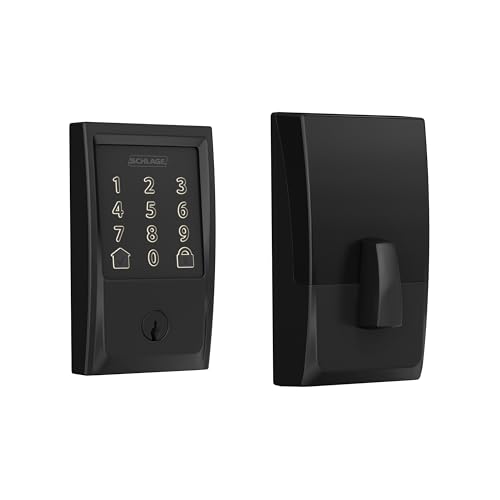
- Built-in Wi-Fi with remote app control
- Supports up to 100 access codes
- Alarm, auto-lock, and touchscreen entry
Best For: Homeowners wanting direct Wi-Fi control and robust access management
Best Fingerprint Convenience

- Six unlocking methods, including fingerprint
- Built-in Wi-Fi requires no bridge
- Approximately eight-month battery life
Best For: Households wanting biometric entry and flexible remote access
Best Matter-Ready Option
ULTRALOQ Bolt SE WiFi Smart Lock

- Seven keyless entry methods
- Supports Matter over Thread and voice control
- Up to 18 months of battery life
Best For: Smart-home users building a Matter-compatible access system
Best Fingerprint and Code Sharing

- Five unlocking methods, including fingerprint
- Supports up to 100 custom passcodes
- Remote alerts and access history
Best For: Homes and rentals managing family and guest access
Best for Easy Setup

- Fast AI-learning fingerprint entry
- Built-in Wi-Fi app control
- USB-C emergency power backup
Best For: Fast biometric access with flexible backup methods
Best for Access Management
Tapo DL100 Smart Wi-Fi Deadbolt

- Up to 200 customizable access codes
- Detailed app alerts and activity logs
- Works with major smart-home platforms
Best For: Families, guests, rentals, and shared access
Remote-Control Value Pick

- Four remote controls with up to 20 m range
- Four AA batteries rated for about 16 months
- Stainless-steel deadbolt for multiple door applications
Best For: Remote-control entry without app dependence
Fingerprint Management Pick

- Fingerprint access rated at under 0.2 seconds
- App, code, fob, key, and other entry methods
- Local AES-128 data storage with activity logs
Best For: Families, rentals, and multi-user access management
Complete Wi-Fi Entry Set
Philips 4200 Series Wi-Fi Smart Lock

- Built-in 2.4GHz Wi-Fi with no hub required
- Fingerprint, app, PIN, and voice-assistant access
- Includes matching handle set for front-door upgrades
Best For: Hub-free front-door modernization with remote control
Best Connected Security – Schlage Encode WiFi Deadbolt
The Schlage Encode is a practical choice for shoppers comparing wireless smart locks with built-in Wi-Fi. It supports remote locking and unlocking, access-code management, activity history, customizable notifications, and optional Alexa or Google Home voice control through the Schlage Home app.
Best For: Homeowners who want established-brand security features and direct Wi-Fi control without adding a hub.
Pros:
- Built-in Wi-Fi enables control and monitoring from anywhere through the Schlage Home app.
- Stores up to 100 access codes and provides lock history and customizable notifications.
- Includes a customizable alarm, touchscreen keypad, auto-lock, and one-touch exterior locking.
- Installs with a screwdriver and includes four AA batteries plus a physical backup key.
Cons:
- Typical battery life is up to six months, shorter than some competing models.
- Voice control requires the Schlage Home app and a compatible voice-enabled device.
With its straightforward installation, broad code capacity, and strong app-based monitoring, the Encode is a well-rounded wireless smart lock for everyday front-door use.
Best Fingerprint Convenience – eufy Security Smart Lock C220
The eufy Security C220 stands out among wireless smart locks for its fingerprint access and built-in Wi-Fi. It also supports app, keypad, physical-key, Apple Watch, and voice unlocking, making it flexible for households with different entry preferences.
Best For: Families and eufy users who want fast biometric entry, remote access, and long battery life.
Pros:
- Offers six unlocking methods, including fingerprint, app, keypad, physical key, Apple Watch, and voice control.
- Built-in Wi-Fi enables remote control without a bridge.
- Eight AA batteries provide approximately eight months of operation, depending on usage.
- Includes self-learning fingerprint recognition, IP53 water resistance, and BHMA Grade 3 certification.
Cons:
- Battery life varies with how frequently the lock is used.
- Its broad feature set may be more than needed for shoppers seeking a basic keypad lock.
The C220 is a versatile wireless smart lock with especially convenient fingerprint entry and useful eufy ecosystem integration, provided its standard deadbolt compatibility matches your door.
Best Matter-Ready Option – ULTRALOQ Bolt SE WiFi Smart Lock
The ULTRALOQ Bolt SE is a feature-rich option for comparing wireless smart locks across access methods and smart-home platforms. Built-in Wi-Fi supports remote management, while Matter over Thread adds compatibility with Apple Home and other Matter-enabled ecosystems when paired with a compatible hub.
Best For: Smart-home users who want fingerprint entry, extensive code sharing, and Matter integration.
Pros:
- Provides seven entry options, including fingerprints, passcodes, app, web portal, eKeys, voice control, and mechanical keys.
- Manages up to 50 fingerprints and 50 access codes with activity history and real-time notifications.
- Advertises up to 18 months of battery life and includes low-battery alerts.
- Supports Alexa, Google Assistant, Siri, and Matter-enabled ecosystems.
Cons:
- Matter over Thread features require a compatible Matter hub or Thread Border Router.
- Built-in Wi-Fi supports 2.4 GHz networks only.
- A door sensor is not included.
The Bolt SE offers unusually broad access and integration options, but shoppers should verify hub requirements, Wi-Fi compatibility, and the lack of a door sensor before buying.
Best Fingerprint and Code Sharing – Philips Wi-Fi Smart Deadbolt
The Philips Wi-Fi Smart Deadbolt combines fingerprint, passcode, key, voice, and app entry in a single wireless smart lock. Its built-in Wi-Fi supports remote control, status monitoring, alerts, access history, and temporary or scheduled codes for household members and guests.
Best For: Homes, rentals, and families that need multiple access methods and flexible guest-code management.
Pros:
- Supports fingerprint, passcode, physical key, Alexa or Google Assistant, and remote app unlocking.
- Can create up to 100 custom passcodes and share one-time or scheduled codes.
- Built-in Wi-Fi enables remote management, real-time alerts, and access-history review.
- Offers claimed 0.3-second fingerprint recognition, adjustable auto-lock, and an anti-tamper alarm.
Cons:
- The supplied details do not specify battery life.
- Voice unlocking depends on compatible Alexa or Google Assistant setup.
For shoppers prioritizing flexible entry and guest access, the Philips lock provides a strong combination of biometric access, code sharing, and remote monitoring in a keypad-style design.
Best for Easy Setup – WYZE Auto-Lock Bolt v2
For shoppers comparing wireless smart locks, the WYZE Auto-Lock Bolt v2 stands out for fast fingerprint entry and built-in Wi-Fi control. Its AI-learning scanner is designed to improve recognition over time, while the keypad, app, and backup keys provide flexible alternatives.
Best For: Households that want quick biometric entry with remote app access and several backup unlocking methods.
Pros:
- Fingerprint scanner unlocks in about 0.5 seconds and learns from repeated use.
- Built-in Wi-Fi enables remote lock management through the Wyze app.
- Offers fingerprint, app, code, and physical-key entry options.
- Includes an emergency USB-C power option and up to eight months of battery life.
Cons:
- Uses eight AA batteries, which may be more than some competing locks.
- Its BHMA Grade 2 rating is below the Grade 3 rating listed for some alternatives.
The Lock Bolt v2 is a practical choice when fingerprint speed is a priority. The tempered-glass scanner, anti-peep keypad, auto-lock, and emergency power support add useful everyday convenience.
Best for Access Management – Tapo DL100 Smart Wi-Fi Deadbolt
The Tapo DL100 is a strong wireless smart lock option for homes that need multiple user codes and detailed access monitoring. Its tactile, backlit keypad supports up to 200 customizable codes, while Wi-Fi, Bluetooth, app, and voice controls cover both nearby and remote use.
Best For: Families, rentals, and shared homes that need customizable access profiles and activity history.
Pros:
- Supports up to 200 customizable codes, including anti-peeping passcode entry.
- Provides remote control, door-status checks, alerts, and timestamped activity logs in the Tapo app.
- Works with Alexa, Google Home, and Samsung SmartThings.
- Offers auto-lock, a PIN attempt limiter, IP54 weather resistance, and BHMA Grade 3 durability.
Cons:
- Battery life varies by connection mode, with up to 200 days on Wi-Fi or 300 days on Bluetooth.
- Voice unlocking requires PIN verification, adding an extra step.
Choose the DL100 if managing different users matters more than fingerprint access. Its standard-door installation, emergency USB-C power, and two backup keys make it a well-rounded keypad-focused lock.
Best Fingerprint and Code Flexibility – Veise VE012W WiFi Fingerprint Smart Lock
The Veise VE012W combines built-in 2.4GHz Wi-Fi with fingerprint, keypad, app, key, and voice entry, making it one of the more flexible wireless smart locks in this group. Its AI fingerprint chip is designed for quick recognition, while the app supports remote access management and detailed notifications.
Best For: Front-door users who want biometric entry alongside extensive PIN management and remote monitoring.
Pros:
- Offers six entry methods, including fingerprint, app, voice, codes, and physical keys.
- Recognizes fingerprints in about 0.2 seconds with a stated 99.99% recognition rate.
- Supports permanent, recurring, time-limited, and one-time codes through the app.
- Includes remote alerts, access logs, auto-lock settings, IP55 water resistance, and AES-128 local data encryption.
Cons:
- Eight AA batteries are required but are not included.
- Its BHMA/ANSI Grade 3 rating is positioned as standard residential durability rather than a higher grade.
The VE012W is appealing for households with varied access needs, including family members, guests, and service providers. Its broad code controls and built-in Wi-Fi reduce the need for a separate hub, while the included warranty extension rewards product registration.
Remote-Control Value Pick – Geevorks Wireless Deadbolt
For shoppers seeking wireless smart locks without app or hub complexity, the Geevorks electronic deadbolt uses remote controls for keyless entry. Its stainless-steel construction, hidden-lock design, and dual-system setup make it a practical option for selected home, office, hotel, garage, and wooden-door applications.
Best For: Buyers who prefer remote-control access and straightforward battery-powered operation.
Pros:
- Includes four remote controls with a stated range of up to 20 meters.
- Uses a digital conversation system designed to resist decoding or duplication.
- Four AA batteries are rated for about 16 months of operation.
- Stainless-steel components and a base-plate design support durability and easier installation.
Cons:
- Access is centered on remote controls rather than an app, fingerprint reader, or keypad.
- Batteries are not included.
- Installation and door compatibility should be confirmed before purchase.
The Geevorks is a focused choice for remote entry rather than a connected smart-home system. It may suit users who want simple wireless control, but shoppers needing activity logs, smartphone access, or voice commands should consider a more feature-rich model.
Fingerprint Management Pick – Veise VE017 Smart Lock
The Veise VE017 is one of the more versatile wireless smart locks for households and multi-tenant properties. It combines fingerprint access with app management, codes, fob cards, and a mechanical key, while its local encryption and activity logs add useful control over who enters and when.
Best For: Families, landlords, and property managers who need multiple access methods and detailed user management.
Pros:
- Supports fingerprint, app, fob card, code, shared code, voice assistant compatibility with the G1 Gateway, and mechanical-key access.
- On-device AI fingerprint recognition is rated at under 0.2 seconds with stated 99.99% accuracy.
- Offers one-time, duration, permanent, and recurring password modes.
- Stores access data locally with AES-128 encryption and provides activity logs and alerts.
Cons:
- Alexa and Google Assistant compatibility requires the separately referenced G1 Gateway.
- The supplied battery note states at least 12 months, but the complete battery specification is not provided.
- Its broad management feature set may be more than needed for a single low-traffic door.
The VE017 stands out when access administration matters as much as unlocking convenience. Its combination of biometrics, flexible codes, local data storage, and event tracking makes it particularly compelling for shared or rental properties.
Complete Wi-Fi Entry Set – Philips 4200 Series Wi-Fi Smart Lock
The Philips 4200 Series is a strong all-in-one choice among wireless smart locks, combining built-in 2.4GHz Wi-Fi with a matching handle set. It supports remote app control, fingerprint entry, voice assistants, and flexible PIN codes, making it well suited to front-door upgrades where hub-free connectivity is important.
Best For: Homeowners and rental-property users wanting built-in Wi-Fi, a complete handle set, and remote access management.
Pros:
- Connects directly to 2.4GHz Wi-Fi without an additional hub or bridge.
- Offers app control, real-time status and access history, fingerprint entry, PIN codes, and voice control through Alexa or Google Assistant.
- Fingerprint access is rated at 0.3 seconds, with auto-lock adjustable from 0 to 180 seconds.
- Includes a matching handle set and fits doors listed as 1-3/8 to 1-3/4 inches thick.
Cons:
- Requires eight AA alkaline batteries, which are not included.
- Uses 2.4GHz Wi-Fi rather than the faster 5GHz band.
- Installation requires checking door dimensions and following the activation procedure.
For shoppers upgrading a front door, the Philips provides a polished combination of hardware and connected features without requiring a separate hub. Its eight-battery setup is worth planning for, but the complete handle set and remote monitoring can simplify a broader entry upgrade.
How We Picked the Best Wireless Smart Locks
We evaluated these Wireless Smart Locks based on the features that matter most after installation: connection reliability, access options, remote-control capabilities, battery considerations, compatibility with smart-home platforms, and the practicality of the included hardware. Models with Wi-Fi built in can offer remote access without a separate hub, while fingerprint readers and tactile keypads provide convenient entry when your phone is unavailable.
We also considered product versatility. Some locks are designed as straightforward deadbolt replacements, while others add handles, voice control, Matter support, or multiple biometric and keypad options. Always confirm door thickness, backset, strike-plate dimensions, and compatibility with your existing deadbolt before buying.
Quick Comparison
| Best For | Look For |
|---|---|
| Broad smart-home compatibility | Matter or support for your preferred platform |
| Key-free household access | Fingerprint reader plus keypad |
| Remote monitoring | Built-in Wi-Fi and app alerts |
| Simple replacement | Compatible deadbolt dimensions and included hardware |
| Shared access | Temporary codes, user management, and activity logs |
Key Buying Factors for Wireless Smart Locks
Connectivity and Smart-Home Support
Built-in Wi-Fi is convenient for remote locking, unlocking, notifications, and access-code management, but it can use more battery power than Bluetooth-only designs. Check whether the lock works with Alexa, Google Home, Apple Home, or Matter if voice control and automation are important to you.
Entry Methods
Fingerprint access is fast and convenient for regular users, while keypads are better for guests, children, cleaners, and deliveries. A physical key override or emergency power option is valuable if the batteries run low or the wireless connection fails.
Security and Reliability
Look for strong mechanical construction, secure mounting, tamper alerts, automatic locking controls, and a dependable app. Auto-lock timing should be adjustable so the door does not lock unexpectedly while you are carrying groceries or working outside.
Installation and Maintenance
Most retrofit models are intended for standard single-cylinder deadbolts, but measurements still matter. Plan to replace batteries on schedule, keep firmware updated, and test the lock manually before relying on it for everyday entry.
Who Should Buy Which Wireless Smart Locks?
Choose a Wi-Fi deadbolt with app alerts if you frequently manage access remotely or want to check the door while away. Fingerprint-focused models are a strong choice for families who want fast entry without memorizing codes. A keypad-first lock suits households that regularly host guests or service providers, while Matter-compatible options are best for buyers building a broader smart-home system.
If you want the simplest upgrade, prioritize a conventional deadbolt design with clear installation instructions and a physical backup key. For maximum flexibility, choose a model that combines Wi-Fi, fingerprint access, keypad codes, remote control, and emergency power support—but confirm that its extra features justify the higher cost and added maintenance.