Long rides and hard training blocks can leave your legs feeling heavy, tight, and fatigued. The best compression boots for cyclists use sequential air pressure to support post-ride recovery while giving you control over fit, intensity, and session length.
We compared 10 full-leg compression systems across pressure settings, portability, coverage, controls, and overall value to help you choose a recovery setup that fits your riding routine.
Best 10 Compression Boots for Cyclists Picks for 2026
Premium Recovery Pick

- Seven compression levels with five overlapping zones
- Bluetooth app adds recovery customization
- Standard fit supports 31–35-inch inseams
Best For: Cyclists wanting premium, customizable full-leg recovery
Versatile Athlete Pick
QUINEAR Air Compression Recovery Boots

- Four chambers cover feet, calves, and thighs
- Eight intensities from 50–120 mmHg
- Three modes, pressure sensing, and adjustable timers
Best For: Cyclists wanting versatile, customizable compression sessions
FDA-Cleared Control Pick
Sharper Image Powerboost Boots

- FDA-cleared for temporary relief of minor aches
- Five zones, modes, and intensities up to 120 mmHg
- Use one or two boots with active deflation
Best For: Cyclists wanting targeted, highly adjustable full-leg compression
Portable Plantar Relief
Cordless Air Compression Leg Boots

- Cordless, portable design with a removable battery
- Three modes and five adjustable pressure levels
- Automatic fit sensing for foot-and-leg coverage
Best For: Cyclists seeking simple, portable foot and leg recovery
Full-Leg Sequential Recovery
MUSUGY Sequential Compression Boots

- Five air chambers provide foot-to-thigh sequential compression
- Nine intensity levels, six modes, and three timers
- Pressure sensor helps balance output across zones
Best For: Cyclists wanting customizable full-leg recovery sessions
Athlete-Grade Cordless Control
FIT KING Pro Cordless Recovery Boots
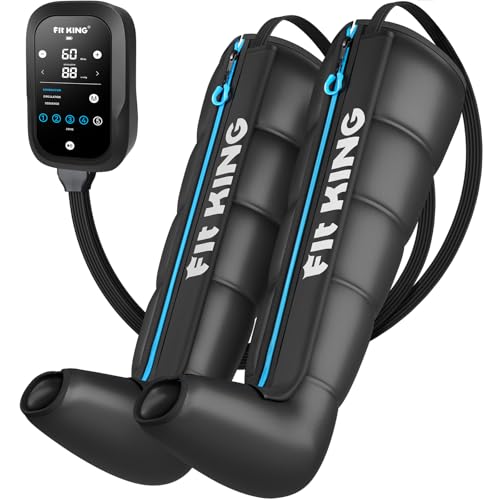
- Three to four hours of cordless compression per charge
- Five-zone control for targeted or full-leg sessions
- 11 pressure levels, 10 timers, and three modes
Best For: Cyclists wanting maximum portable adjustability
Best Wireless Option
Anaconda Wireless Leg Compression Boots

- Wireless operation with a four-hour battery
- Four zones cover the full leg
- Three modes with targeted-zone control
Best For: Cyclists who want portable, cord-free recovery
Best for Customizable Sessions
FIT KING Full Leg Recovery Boots

- Four air channels provide full-leg coverage
- Eight pressure intensities and three modes
- Includes a two-year support policy
Best For: Cyclists who want extensive wired-session controls
Best for Fine-Tuned Pressure
5-Zone Compression Massager Boots

- Five zones and ten air chambers
- Twelve pressure levels with six modes
- Memory and pause functions add convenience
Best For: Cyclists who want precise, repeatable sessions
Premium Recovery Pick – Hyperice Normatec 3 Legs
For cyclists seeking advanced compression boots for cyclists, the Hyperice Normatec 3 delivers dynamic air compression across the full leg. Its five overlapping zones, seven intensity levels, ZoneBoost, and app connectivity make it a highly customizable recovery system.
Best For: Cyclists who want premium, app-connected full-leg recovery and precise compression control.
Pros:
- Seven compression levels with patented Pulse technology.
- Five overlapping zones and ZoneBoost target different areas of the leg.
- Bluetooth connectivity enables additional customization through the Hyperice app.
- Designed for full-leg use, including the feet, calves, knees, and thighs.
Cons:
- Available on Amazon only in Standard size, for 31–35-inch inseams.
- Maximum thigh circumference is 30 inches.
- Heavier and more expensive in design than simpler home massagers.
The Normatec 3 is a strong choice when customization and full-leg coverage matter most. Confirm the inseam and thigh measurements before ordering, especially if you have a larger fit.
Budget Foot-and-Calf Pick – FIT KING Leg Compression Massager
The FIT KING is a practical entry point for shoppers comparing compression boots for cyclists, focusing on the feet and calves rather than the full thigh. Its adjustable wraps, handheld controller, and portable design suit regular at-home or office use.
Best For: Cyclists who primarily want foot-and-calf massage with flexible sizing and straightforward controls.
Pros:
- Covers the full foot and calf with larger internal air bags and chambers.
- Offers two modes and three selectable massage intensities.
- Includes two size extensions and fits calves up to 28.5 inches.
- Comes with a portable storage bag and a two-year warranty.
Cons:
- Does not provide heat or thigh massage.
- Offers fewer intensity levels and less coverage than full-leg systems.
- Requires corded power from the included DC adapter.
Choose the FIT KING if your cycling recovery needs center on tired feet and calves. It is less suitable for riders who want compression extending through the thighs.
Versatile Athlete Pick – QUINEAR Air Compression Recovery Boots
The QUINEAR recovery boots offer a flexible option for cyclists comparing compression boots for cyclists. Four air chambers cover the foot, calf, and thigh, while eight intensity levels, three modes, pressure sensing, and adjustable timers allow sessions to be tailored to different recovery preferences.
Best For: Athletes and cyclists who want broad adjustability, sequential compression, and a portable recovery setup.
Pros:
- Four air chambers provide coverage from the foot through the thigh.
- Eight intensity levels span 50–120 mmHg.
- Three compression modes and 20-, 25-, or 30-minute timers support customized sessions.
- Includes a carry bag and a 24-month worry-free service commitment.
Cons:
- Uses corded electric power rather than a rechargeable battery.
- It is not water resistant.
- The large size may not suit users with smaller legs.
The QUINEAR stands out for riders who want many settings without moving to a more feature-heavy app-based system. Check the sizing carefully and plan to use it near a power outlet.
FDA-Cleared Control Pick – Sharper Image Powerboost Boots
The Sharper Image Powerboost Boots combine full-leg coverage with extensive controls, making them a notable option among compression boots for cyclists. Five air chambers, five massage modes, five intensity levels, and targeted zone control support recovery sessions after training or long days.
Best For: Cyclists who value FDA-cleared compression therapy, targeted zones, and use of one or both boots.
Pros:
- FDA-cleared under 510(k) K251531 for temporary relief of minor muscle aches and pains.
- Five air chambers provide full-leg compression.
- Five modes and five intensity levels reach up to 120 mmHg.
- Can operate with one boot or two and includes active deflation for easier storage.
Cons:
- The listed S/M fit supports 25–31-inch inseams, limiting compatibility for taller riders.
- Requires direct AC power.
- Its five-zone controls may take more time to learn than simpler systems.
The Powerboost is a compelling choice for cyclists who want detailed control and the flexibility to treat one leg at a time. Verify the 25–31-inch inseam range before buying.
Portable Plantar Relief – Cordless Air Compression Leg Boots
For shoppers comparing compression boots for cyclists, this cordless model emphasizes portable, straightforward recovery. It combines three massage modes, five pressure levels, automatic fit sensing, and coverage for the feet, ankles, calves, and legs. The removable battery supports about 70 minutes of use, making it practical for post-ride sessions at home, work, or while traveling.
Best For: Cyclists and active users who want cordless foot-and-leg compression with plantar-fasciitis-focused relief and simple controls.
Pros:
- Cordless design with a removable battery and included storage bag.
- Three massage modes and five adjustable pressure levels.
- Automatic sensing adapts the fit to different leg shapes and sizes.
- Targets the feet, ankles, calves, and legs without heat.
Cons:
- About 70 minutes of average battery life may require frequent charging for multiple sessions.
- Offers fewer pressure levels and zones than the more advanced boots in this roundup.
- Its stated focus on foot and leg relief may be less suitable for shoppers seeking extensive thigh-zone programming.
This is a convenient pick when portability and foot-focused comfort matter most. Cyclists wanting longer battery life or more granular zone control may prefer a larger full-leg system.
Full-Leg Sequential Recovery – MUSUGY Sequential Compression Boots
These compression boots for cyclists use five sequential air chambers to move pressure from the foot upward through the calves, knees, and thighs. With nine intensity levels, six programs, and three timer settings, they offer detailed control for post-ride recovery. The built-in pressure sensor also adjusts air output across zones for a more even fit.
Best For: Cyclists and athletes who want full-leg sequential compression with multiple intensity, zone, and timing options.
Pros:
- Five-chamber sequential compression covers the foot, calves, knees, and thighs.
- Nine pressure levels ranging from 40–120 mmHg.
- Six modes include full-leg and focused foot, calf, or thigh programs.
- Three session timers and memory function support repeatable routines.
Cons:
- The listed fit is specific: at least a 36-inch inseam, thighs up to 31 inches, and calves up to 22 inches.
- The supplied notes do not identify a cordless battery, so it may be less convenient for travel or use away from an outlet.
- Its broader controls may take more time to configure than simpler boot systems.
For riders prioritizing comprehensive leg coverage and adjustable sequential pressure, this is one of the more configurable options. Check the sizing carefully before buying, particularly if you have shorter legs or larger measurements.
Athlete-Grade Cordless Control – FIT KING Pro Cordless Recovery Boots
For cyclists who want flexible recovery away from an outlet, the FIT KING Pro combines cordless operation with five-zone control. Its five air chambers, 11 pressure levels, 10 time settings, and three massage modes let you choose full-leg or targeted sessions. A 2,500mAh battery is rated for three to four hours of continuous compression, and a carry bag supports gym and travel use.
Best For: Athletes and cyclists seeking long battery life, extensive pressure adjustment, and targeted or full-leg compression.
Pros:
- Rechargeable cordless design provides a stated three to four hours of continuous use.
- Five-zone control supports foot, calf, thigh, upper-thigh, and full-leg sessions.
- Offers 11 pressure levels, 10 time settings, and three massage modes.
- Includes a two-year warranty, carry bag, and pressure sensors for adaptive fitting.
Cons:
- At 4.5 kg, it is heavier than the lighter cordless option in this roundup.
- The extensive controls may be more than casual users need for basic post-ride relief.
- Its 50–150 mmHg pressure range reaches higher intensities, so users should choose settings carefully.
This is the strongest fit for riders who value adjustability and frequent portable use. Its higher weight and larger feature set are trade-offs for the extended battery and five-zone customization.
Best Wireless Option – Anaconda Wireless Leg Compression Boots
For cyclists seeking convenient compression boots for cyclists, the Anaconda system stands out with wireless operation, full-leg coverage, and targeted controls. Its four-hour rechargeable battery makes it practical for recovery at home, in the gym, or while traveling.
Best For: Cyclists who prioritize portability and cord-free recovery after rides.
Pros:
- Wireless design with a stated four-hour battery life.
- Four sequential zones cover the foot, calf, knee, and thigh.
- Three modes include full-leg, massage, and targeted-zone operation.
- Offers up to 200 mmHg of compression and includes a travel bag.
Cons:
- The listed charging time is four hours.
- Medium sizing may not suit every leg shape.
- It is moisture resistant, rather than described as fully waterproof.
The Anaconda is a strong fit when freedom from an outlet matters. Its simple controller and targeted-zone mode also make it appealing for riders who want straightforward, customizable sessions without an app.
Best for Customizable Sessions – FIT KING Full Leg Recovery Boots
The FIT KING system is a practical choice among compression boots for cyclists who want adjustable pressure and timed sessions. Its four air channels cover the full leg, while the digital controller provides multiple intensity and mode settings.
Best For: Riders who prefer corded boots with detailed pressure and session controls.
Pros:
- Four independent air channels address the feet, calves, knees, and thighs.
- Three modes, eight pressure intensities, and three time options support customization.
- Pressure sensors adjust inflation for different leg sizes.
- Includes a two-year worry-free support policy.
Cons:
- The corded design requires access to an outlet.
- At 3.1 kg, it is heavier than some portable recovery systems.
- It is not water resistant.
Choose the FIT KING if control options matter more than wireless convenience. The zipper design and sensor-based pressure control can make setup easier, though its corded format is better suited to a dedicated recovery spot.
Best for Fine-Tuned Pressure – 5-Zone Compression Massager Boots
These compression boots for cyclists offer particularly detailed adjustment, with five zones, ten air chambers, twelve pressure levels, and memory functionality. They are designed for riders who want to save preferred settings and focus on specific areas after training.
Best For: Cyclists who want granular pressure control and repeatable recovery routines.
Pros:
- Five-zone coverage targets the foot, lower and upper calf, knee, and thigh.
- Six modes, twelve pressure levels, and three timers provide flexible sessions.
- Memory and pause functions make repeat use more convenient.
- Pressure sensors help prevent over-tightening, and a carry bag is included.
Cons:
- The corded design limits use away from an outlet.
- No heating control is included.
- It is not water resistant.
This model is a good match for cyclists who like to fine-tune recovery rather than use a single preset. The five-zone layout and saved settings are useful when calves, thighs, or other areas need different attention across training days.
How We Picked the Best Compression Boots for Cyclists
We focused on features that matter after cycling: full-leg coverage, sequential compression, adjustable intensity, practical controls, and a fit that can accommodate different leg sizes. We also considered whether each system is cordless or portable, how many zones or air chambers it uses, and whether the design is better suited to occasional home use or frequent training.
Because comfort and fit vary substantially, we treated high pressure counts and extra modes as useful options rather than automatic advantages. A well-fitting boot with simple controls may be more useful than a feature-heavy model that is cumbersome to set up.
Quick Comparison
| Feature | Why It Matters | Best For |
|---|---|---|
| Full-leg coverage | Compresses the foot, calf, knee, and thigh in one session | Riders wanting comprehensive post-ride use |
| Sequential zones | Creates a progressive compression pattern up the leg | Recovery-focused routines |
| Multiple intensity levels | Allows gentler sessions or stronger pressure when preferred | Shared households and changing needs |
| Cordless operation | Makes sessions easier away from an outlet | Travel, events, and flexible home use |
| Size options | Helps maintain even contact and comfortable pressure | Riders with shorter, longer, or broader legs |
Key Buying Factors for Compression Boots for Cyclists
Coverage and Fit
Look for boots that cover the areas you want to address without bunching or leaving large gaps. Check the manufacturer’s height and circumference guidance before buying, especially if you have particularly long legs or larger thighs. A snug fit should feel secure, not painfully tight.
Pressure Control and Sequencing
Several intensity levels let you start conservatively and adjust over time. Sequential compression is commonly preferred for recovery because the zones inflate in order rather than applying identical pressure everywhere. More settings can be helpful, but clear controls are just as important.
Power and Portability
Corded systems can be perfectly practical for a dedicated recovery area. Cordless boots are more convenient for travel, races, and use on the sofa, but check battery life, charging time, and whether the pumps add noticeable weight.
Comfort, Noise, and Maintenance
Consider padding, zipper or hook-and-loop closures, pump noise, and how easy the boots are to store. Removable or wipe-clean materials are useful if you use the system frequently or after sweaty rides.
Who Should Buy Which Compression Boots for Cyclists?
Choose a premium system such as the Hyperice Normatec 3 if you want a polished, established recovery platform and expect to use it regularly. Models from FIT KING, QUINEAR, Sharper Image, and similar brands can suit riders seeking adjustable full-leg compression at a range of prices.
Prioritize a cordless model if you travel to races or want to recover away from a fixed chair. Choose a model with more zones and intensity levels if you share the boots or want precise control. For occasional riders, a simpler full-leg system may deliver better value than paying for advanced portability or extensive programming.
Compression boots should complement—not replace—sleep, hydration, nutrition, mobility work, and appropriate medical care. Follow the product instructions and consult a healthcare professional before use if you have a condition affected by compression or circulation.